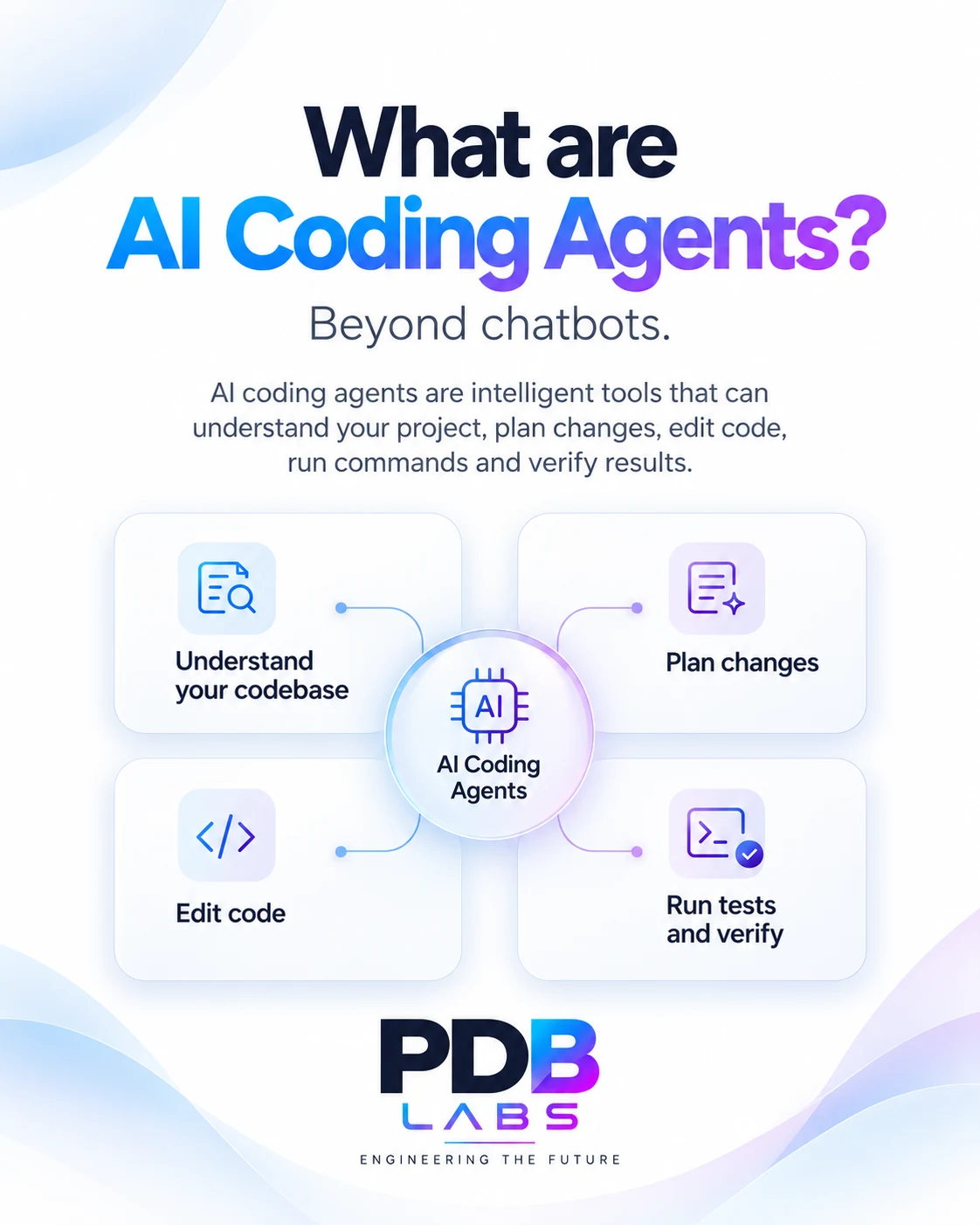
What Are
AI Coding Agents?
Beyond chatbots.
AI coding agents can understand development goals, reason about context, plan actions and verify results. The important part isn't the programming language — it's the problem-solving workflow.
← Back to InsightsFrom intention to verified outcome.
Agents connect reasoning and action in a repeatable feedback loop.
What are AI Coding Agents?
Unlike a chatbot that primarily responds to a prompt, an AI coding agent can pursue a development goal through multiple connected steps. It uses context, tools and feedback to decide what to do next. Human direction and review remain important.
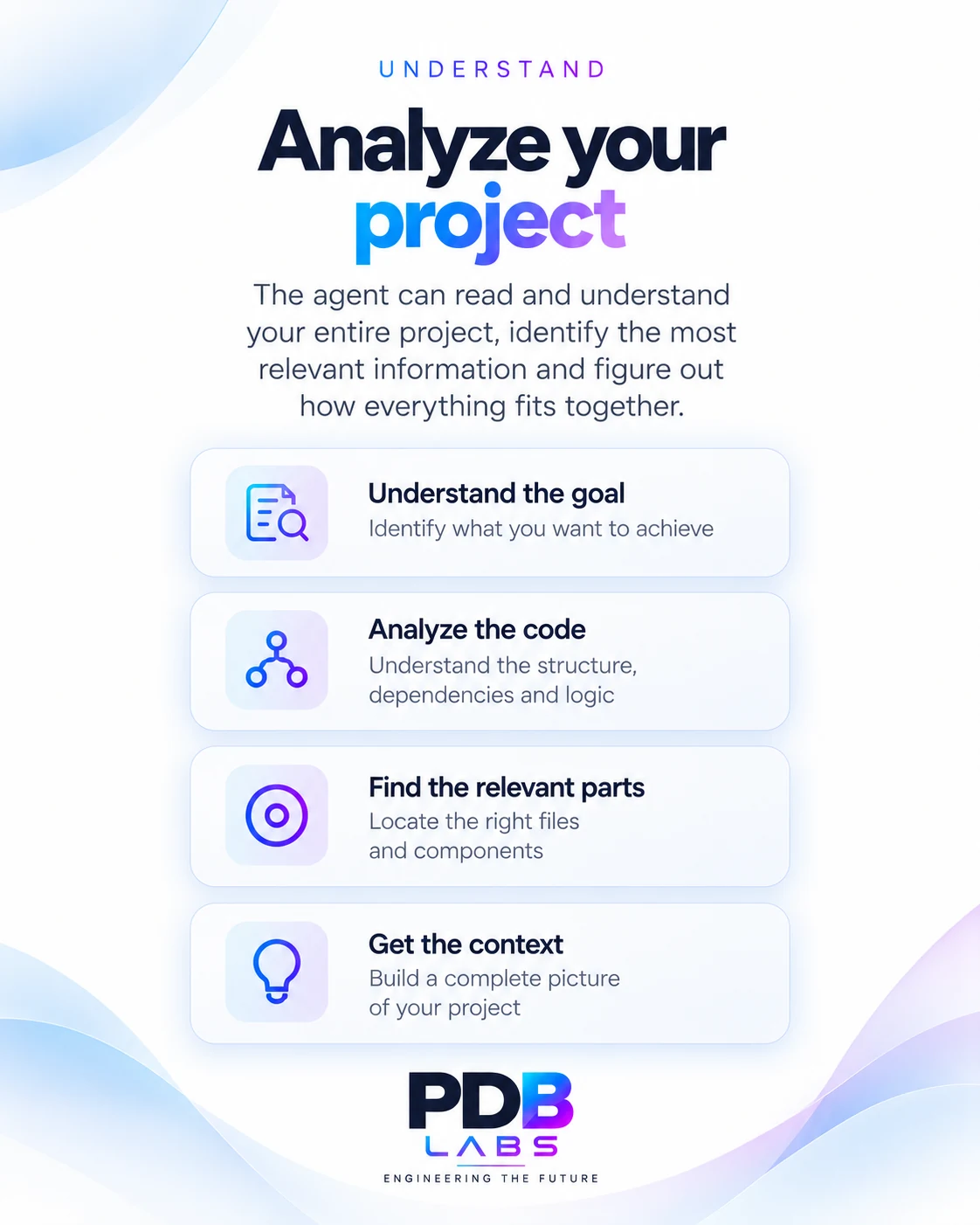
Analyze your project
Before taking action, the agent needs to understand the objective and the environment. It identifies relevant components, dependencies, constraints and existing behavior. This reasoning applies whether the project uses Python, JavaScript, Java or another language.
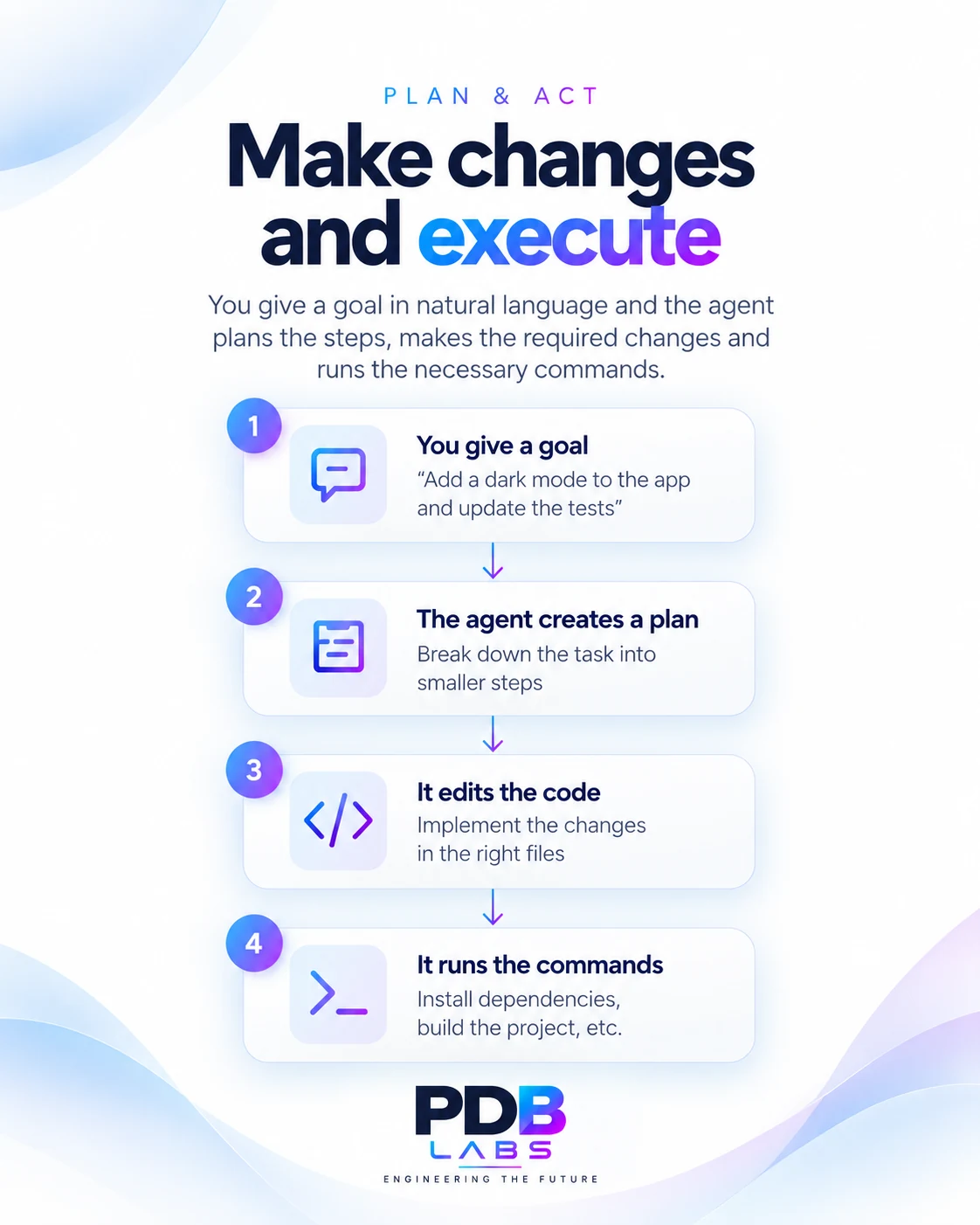
Make changes and execute
A goal becomes a sequence of manageable steps. The agent selects an approach, carries out appropriate actions and evaluates intermediate outputs. Actions might involve editing code, updating configuration or using development tools — the underlying logic stays the same.
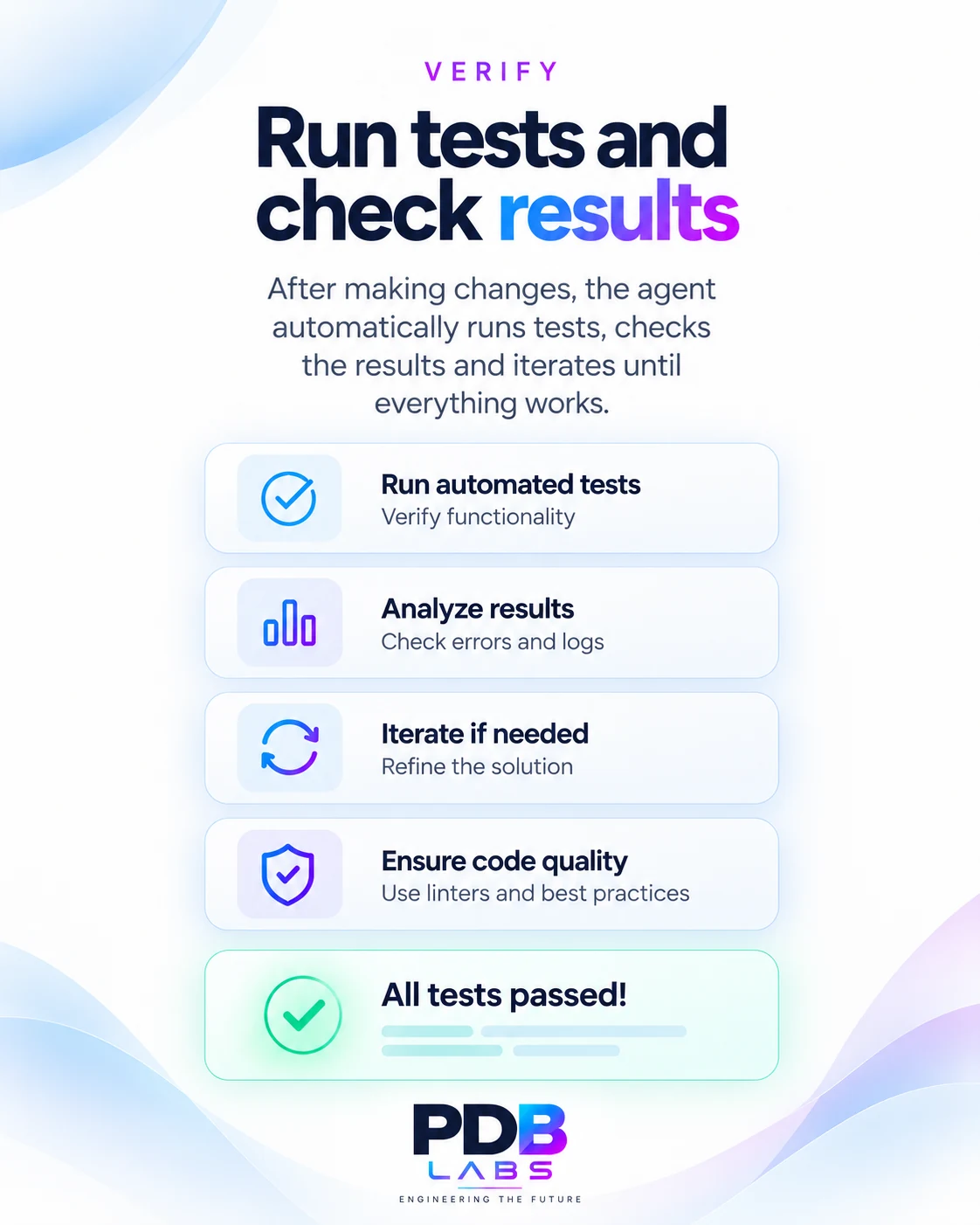
Run tests and check results
Producing an output is not the same as achieving the goal. The agent compares results against expectations, uses suitable checks, identifies gaps and revises the approach when necessary. Verification methods vary by project, but the feedback loop is universal.
A more productive future
AI coding agents can reduce repetitive work and support faster exploration of solutions. Their value comes from combining automation with engineering judgment: developers still define objectives, assess trade-offs and take responsibility for quality.
Logic over language.
Different tools and programming languages change how an agent acts — not the core principles of understanding, planning, acting and verifying. AI agents support engineers; they don't replace engineering judgment.